Pain in Pregnancy
The following information is taken from Wikipedia.org, http://en.wikipedia.org/wiki/Pelvic_girdle_pain
Go here for Pregnancy Massage | Pregnancy Back Pain
For pregnancy massage special go here.
Want to learn how the pain relief works? Scroll down to the bottom.
Go here for Pregnancy Massage | Pregnancy Back Pain
For pregnancy massage special go here.
Want to learn how the pain relief works? Scroll down to the bottom.
This specifically discusses pain while pregnant and focuses in the pelvic girdle area:
Pregnancy related Pelvic Girdle Pain (PGP) causes pain, instability and limitation of mobility and functioning in any of the three pelvic joints. PGP has a long history of recognition, mentioned by Hippocrates[1] and later described in medical literature by Snelling.[2]
The affection appears to consist of relaxation of the pelvic articulations, becoming apparent suddenly after parturition or gradually during pregnancy and permitting a degree of mobility of the pelvic bones which effectively hinders locomotion and gives rise to the most peculiar and alarming sensations.
—Snelling (1870), [2]
Pregnancy related Pelvic Girdle Pain (PGP) causes pain, instability and limitation of mobility and functioning in any of the three pelvic joints. PGP has a long history of recognition, mentioned by Hippocrates[1] and later described in medical literature by Snelling.[2]
The affection appears to consist of relaxation of the pelvic articulations, becoming apparent suddenly after parturition or gradually during pregnancy and permitting a degree of mobility of the pelvic bones which effectively hinders locomotion and gives rise to the most peculiar and alarming sensations.
—Snelling (1870), [2]
Here is the anatomy of the pelvis, according to the Wikipedia.org article:
The pelvis is the largest bony part of the skeleton and contains three joints: the pubic symphysis, and two sacroiliac joints. A highly durable network ofligaments surrounds these joints giving them tremendous strength.
The pubic symphysis has a fibrocartilage joint which may contain a fluid filled cavity and is avascular; it is supported by the superior and arcuate ligaments. The sacroiliac joints are synovial, but their movement is restricted throughout life and they are progressively obliterated by adhesions. The nature of the bony pelvic ring with its three joints determines that no one joint can move independently of the other two.[3]
The pelvis is the largest bony part of the skeleton and contains three joints: the pubic symphysis, and two sacroiliac joints. A highly durable network ofligaments surrounds these joints giving them tremendous strength.
The pubic symphysis has a fibrocartilage joint which may contain a fluid filled cavity and is avascular; it is supported by the superior and arcuate ligaments. The sacroiliac joints are synovial, but their movement is restricted throughout life and they are progressively obliterated by adhesions. The nature of the bony pelvic ring with its three joints determines that no one joint can move independently of the other two.[3]
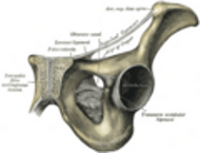
Pubic symphysis
pain in pregnancy.
photo from:http://en.wikipedia.org/wiki/Pelvic_girdle_pain
|
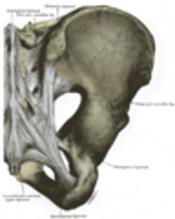
Posterior Sacroiliac joint
pregnancy back pain
photo from http://en.wikipedia.org/wiki/Pelvic_girdle_pain
|
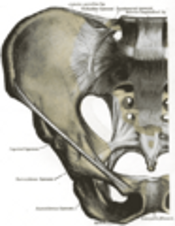
Anterior Sacroiliac joint
pregnancy pain
photo from http://en.wikipedia.org/wiki/Pelvic_girdle_pain
|
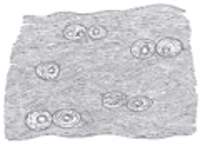
intervertebral fibrocartilage.
pregnancy back pain
photo from http://en.wikipedia.org/wiki/Pelvic_girdle_pain
|
What Release the Pain does is to help the body release the fascia that's within the bones, organs, ligaments, joints, and more-that is causing the tightness and pain, stress, and suffering.
During the session- gentle hand manipulation is used in specific areas, consciousness attention with the client is being taught, and energetic Chi activates in the process.
This results in the profound relaxation for the client, and if the client is sensitive enough, she can feel the pain and stress moving on and leaving.
During the session- gentle hand manipulation is used in specific areas, consciousness attention with the client is being taught, and energetic Chi activates in the process.
This results in the profound relaxation for the client, and if the client is sensitive enough, she can feel the pain and stress moving on and leaving.